October is ADHD awareness month, and the 2026 theme is a Community of Support, which highlights shared experiences and resources to help individuals with ADHD.
To honour this theme, we want to educate others about our approach to ADHD counselling, ADHD symptoms and academic accommodations that students can access to increase their success in school.
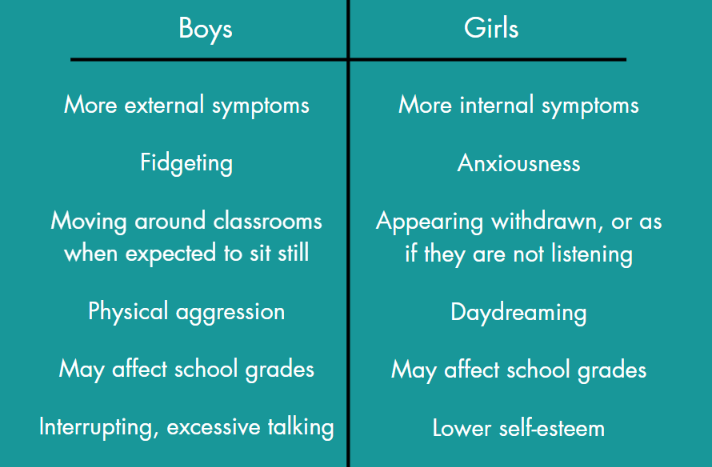
Let’s start with symptoms. ADHD often presents differently in children and adults, as well as men and women. However, this is not an exhaustive list, and there can absolutely be overlap between categories.
How Do Our Counsellors Approach ADHD?
To answer this question, we asked Keri, one of our Clinical Counsellors.
“The best thing I’ve heard is if you have met one person with ADHD you have met ONE person with ADHD. The idea that everyone’s ADHD is different and unique – it can’t be generalized or put in a box. ADHD can often be misdiagnosed or comorbid with depression in men and anxiety in women. This means that sometimes the diagnosis can be missed. It is often missed in young girls and women BECAUSE it doesn’t present in the ‘typical’ way.”
She continued with some strategies for individuals with ADHD outside of sessions:
“The other thing that I find significant is educating the loved ones of individuals with ADHD that it is MUCH more than being scattered, energetic, forgetful etc. Really inviting [family and friends] into an authentic understanding of what ADHD truly is. Additionally, [children with ADHD] usually benefit from a different type of parenting than neurotypical kids.”
On her counselling approach, Keri mentioned:
“I generally use a lot practical tools in session to better support my neurodivergent clients translate new skills into their daily routine.”
What Does ADHD Look Like In Kiddos?
What Does ADHD Look Like in Adults?
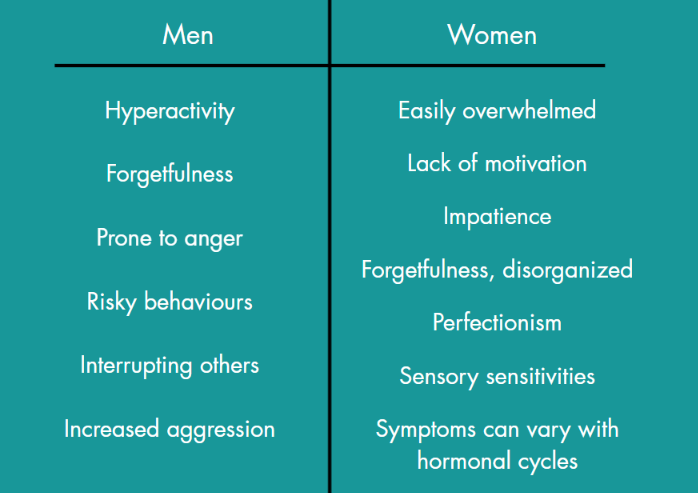
To summarize, men are likely to show more external symptoms while women are more likely to show internal symptoms.
What Are Academic Accommodations?
Academic accommodations are tools to help students learn in a way that works for them. They may include:
- More time for tests
- Standing desks
- Fidget tools
- Noise-cancelling headphones
- Separate writing rooms
- Alternate forms of communication
- Increased breaks
- And more!
A common misconception about accommodations is that they provide an unfair advantage. However, they actually help to level the playing field by accommodating different needs.
Who Can Register For Accommodations?
According to the Government of Alberta, ADHD is classified as a learning disability. Therefore individuals with this disorder are legally entitled to accommodations.
To register, students/parents must have documentation of a diagnosis, made by a professional. The qualified professional depends on the type of disability, but some include psychologists, psychiatrists, and physicians.
When you have medical documentation ready, contact your child’s school. Once in contact, the school will create a program planning team. This typically involves the guardians, teachers, professional staff (such as the school counsellor), and the student. The purpose of the team is to make an Individualized Program Plan or Learning Support Plan, which outlines the student’s needs, goals, and accommodations.
Allegro has numerous counsellors who specialize in supporting individuals with ADHD. To learn more, book a free, 20-minute consultation here.